



Teaching Philosophy
Teaching and learning are not unilateral, but rather correlated and interchanged like hand-loomed fabric. The hand-looming process involves using a loom to interlace two sets of threads to create unique and practical products. Students are the threads, and the teacher is the loom that supports, facilitates, and motivates them toward their unique strengths. Learning is the process of intertwining these threads in organized, complex steps. Students absorb knowledge by interacting with the teacher, peers, and materials, making connections to their previous experiences. Ultimately, the purpose of teaching goes beyond developing technical skills; it cultivates relationships, broadens perspectives, and helps students apply what they learn to their everyday lives.
Every student possesses a distinct individuality, much like the many different thread materials used in looming. My main goal is for students to become more open-minded about concepts in art to develop their own uniqueness. Just as collaborating two different threads makes a sturdier fabric, my long-term goal is to build their ability to cooperate and cultivate a shared passion for learning. When achieved, learning extends far beyond my classroom, instilling lifelong social skills of commitment and collaboration.
To achieve these goals, students participate in three main activities:
-
Art Criticism: Through analysis and discussion of artworks, students learn art history while deepening their conceptual understanding.
-
Collaborative Projects: To foster community, students either work on a single shared piece or create individual artworks that we combine into a larger installation.
-
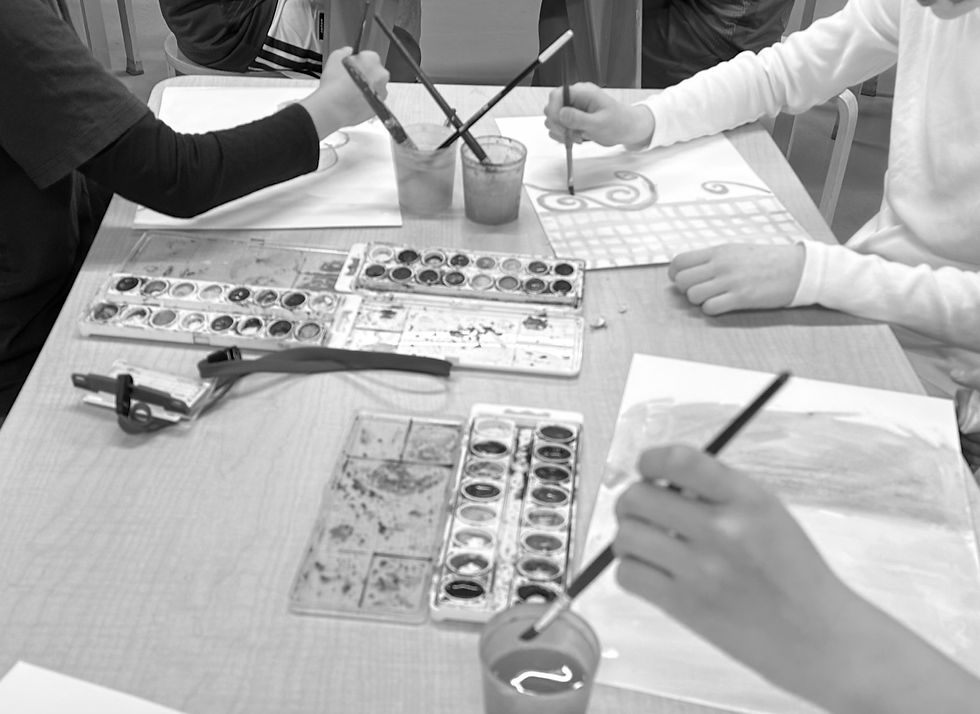
Individual Studio Practice: Students pursue their own ideas and experiment with different materials.
While students work, I observe, listen, and offer guidance—teaching technical skills, introducing new vocabulary, posing questions, or prompting deeper thinking. Individual check-ins also take place to discuss progress, troubleshoot problems, highlight strengths, and build mutual respect and trust.
Above all, I want to be a teacher who values communication and creates a respectful, caring environment. A safe environment allows students to build trust, share their ideas comfortably, and take creative risks without hesitation. Furthermore, I want to be a teacher who never stops learning. Continuing my personal art practice and researching art education improves my professionalism, helping me facilitate a better learning environment for my students.